
What Is AdSense and How Does It Work? A 2026 Guide for Publishers
If you run a website, chances are AdSense was the first monetization tool you ever set up. It’s simple, it’s free, and Google handles most of the heavy lifting. But in 2026, more publishers are asking whether AdSense is still their best option, or just the most familiar one.
The short answer: AdSense still works, but it’s no longer the only serious option, and for many publishers, it’s not even the most profitable one. Newer ad networks and monetization platforms now offer better fill rates, more ad formats, and revenue models that go beyond a single banner slot.
Let’s break down what AdSense actually is, how it works, and what publishers should weigh before deciding if it’s still the right fit for their site.
What Is AdSense?
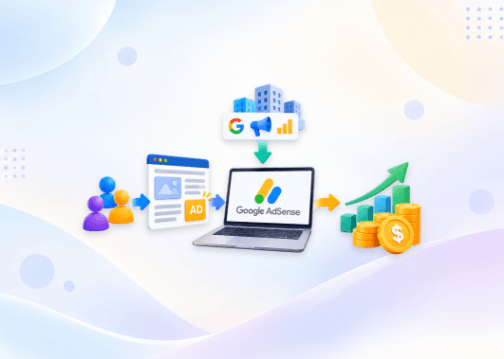
Google AdSense is an advertising program that lets website owners display ads on their site and earn money when visitors view or click on them. It’s one of the oldest and most widely used ad networks, connecting publishers who have ad space to sell with advertisers who want to buy it.
You sign up, add a small piece of code to your site, and Google’s system automatically places relevant ads in your available slots. You don’t need to negotiate deals with individual advertisers or manage ad creatives yourself. Google matches ads to your content and audience, then pays you a share of whatever the advertiser spent.
For years, this made AdSense the default starting point for bloggers, news sites, and content creators who wanted to earn from their traffic without building a sales team.
How Does AdSense Work?
AdSense runs on an auction model. Every time a visitor loads a page with an AdSense unit, Google runs a real-time auction among advertisers who want to reach that specific visitor, based on factors like their location, browsing history, and the page’s content.
Here’s the basic flow:
- A visitor lands on your page.
- AdSense identifies available ad slots and relevant advertiser bids.
- The highest-value ad, based on the advertiser’s bid and quality score, wins the auction.
- The ad loads, and you earn revenue if the visitor views it (CPM-based ads) or clicks it (CPC-based ads).
Google keeps a cut of the ad spend, typically around 32%, and pays out the rest to the publisher. Payouts depend heavily on your niche, traffic quality, geographic audience, and how well your content matches high-paying ad categories like finance or insurance.
The catch is that publishers have limited control. You can block certain ad categories or adjust ad density, but you can’t set your own floor prices the way you can on some other platforms, and approval requires meeting Google’s content and traffic policies.
Key Players in the AdSense Ecosystem
To understand where AdSense fits into the bigger monetization picture, it helps to look at who’s actually involved in the transaction.
Publishers
Publishers are website owners with content and traffic. They provide the ad inventory, meaning the actual space on their pages where ads appear. Their goal is to maximize revenue per visitor without hurting user experience or page speed.
Advertisers
Advertisers are the businesses paying to show ads. They use AdSense (through Google Ads) to reach specific audiences based on interests, keywords, or demographics, aiming for clicks, conversions, or brand visibility.
AdSense (Google)
AdSense sits in the middle, running the auction, matching supply with demand, and handling billing for both sides. It takes a percentage of ad spend as its fee and provides the tools, targeting, and fraud protection that make the whole system function without publishers and advertisers needing to deal directly with each other.
This three-way structure works well at scale, but it also means publishers are dependent on Google’s pricing, policies, and algorithm changes, which is a big reason many are now looking elsewhere.
Why Look for an AdSense Alternative?
AdSense isn’t going anywhere, but it does have real limitations that become more obvious as a site grows.
- Revenue share isn’t negotiable. Google’s cut is fixed, and you have little room to improve your margin on the platform itself.
- Approval and policy risk. Accounts can be suspended for policy violations, sometimes without much warning, cutting off your primary income source overnight.
- Limited ad formats. AdSense covers display and text ads well, but it doesn’t offer native, video, or rewarded ad formats to the same depth as specialized platforms.
- No support for engagement-based monetization. AdSense is purely ad-impression driven. It doesn’t help you build the kind of on-site engagement, gamification, or retention loops that increase session time and, in turn, ad revenue.
- One-size-fits-all optimization. Google’s algorithm optimizes for its own network, not necessarily for your specific audience or niche.
For publishers who want more control, better fill rates, or additional revenue streams beyond a single ad network, exploring alternatives isn’t about abandoning AdSense. It’s about not relying on just one source of income.
Factors to Consider While Selecting the Best AdSense Alternative
Not every alternative is a fair swap. Before switching or adding a second network, weigh these factors.
Traffic and Approval Requirements
Some networks require a minimum traffic threshold or manual review, similar to AdSense. Check whether your current traffic qualifies before investing time in setup.
Ad Formats Offered
Look for platforms that support a wider mix, native ads, video, interstitials, or rewarded formats, so you’re not limited to standard display banners.
Fill Rate and eCPM
A network is only useful if it actually fills your ad slots consistently and at competitive rates. Low fill rates mean empty ad space and lost revenue, regardless of how good the eCPM looks on paper.
Payment Terms and Minimum Payout
Compare payout thresholds, payment schedules, and accepted payment methods. Some networks pay net-30, others net-60, and that difference matters for cash flow.
Support for Engagement and Retention
The strongest platforms today go beyond serving ads. They help publishers increase engagement through gamification, interactive content, and retention tools, which naturally lifts ad impressions and session value over time.
Header Bidding and Mediation Compatibility
If you’re already running AdSense, check whether the alternative supports header bidding or mediation, so you can run multiple networks together instead of choosing just one.
Final Thoughts
AdSense remains a solid entry point for new publishers, but it isn’t the finish line. As your site grows, the limitations around revenue share, ad format variety, and policy risk become harder to ignore. The publishers seeing the strongest growth in 2026 aren’t necessarily the ones with the most traffic. They’re the ones diversifying their monetization stack, combining ad revenue with engagement and retention strategies that keep visitors coming back.
Whether you stick with AdSense, add a second network, or move to a platform built around monetization and engagement together, the goal stays the same: get more value out of every visitor without sacrificing their experience.
FAQs
Is AdSense still worth using in 2026? Yes, especially for newer or smaller sites. It’s easy to set up and doesn’t require advertiser relationships. It works best as a starting point rather than a permanent, single-source strategy.
Can I use AdSense alongside another ad network? Yes, many publishers run AdSense with a header bidding setup or a second network to increase competition for their ad slots and improve overall fill rate and eCPM.
Why did my AdSense application get rejected? Common reasons include thin content, policy violations, low traffic, or site navigation issues. Review Google’s publisher policies and reapply once those issues are fixed.
What’s the difference between CPM and CPC in AdSense? CPM pays based on ad impressions (views), while CPC pays based on clicks. Your earnings depend on which ad types appear on your site and how your audience interacts with them.
Do AdSense alternatives pay better than AdSense? It depends on your niche, traffic, and audience location. Some alternatives offer better fill rates or formats for specific content types, but results vary, so testing is the only reliable way to know.
Is it risky to switch away from AdSense completely? It can be, especially if you rely on Google Ads-driven traffic or content matching. Most publishers reduce risk by adding alternatives alongside AdSense first, rather than dropping it outright.