
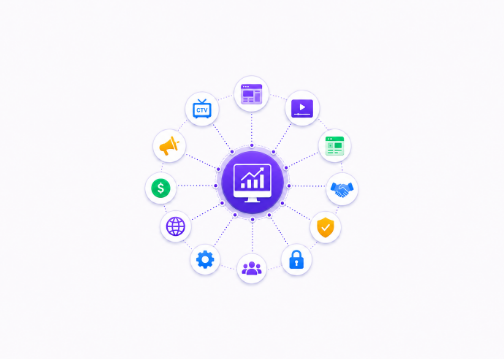
What Is a Supply Side Platform? The Publisher Advantage to Better Fill and Better Bids
Every publisher selling ad inventory eventually runs into the same question how do you get more advertisers competing for the same ad space, without manually managing a dozen separate deals? That’s the exact problem a supply side platform was built to solve.
A Supply Side Platform (SSP) is a technology platform that lets publishers connect their ad inventory to multiple advertising exchanges and demand sources at once, running an automated auction so more buyers compete for every impression, which typically means better fill rates and stronger bids than working with a single ad network alone.
Here’s how it actually works, what it’s made of, and how it compares to the buy-side equivalent.
What Is a Supply Side Platform?
A supply side platform, or SSP, is software built for the “supply” side of digital advertising, meaning the publishers who have ad inventory to sell. It connects a publisher’s available ad space to a wide network of demand sources, including ad exchanges, agencies, and individual advertisers, and manages the auction process that decides which ad actually shows.
Before SSPs existed, publishers typically worked with ad inventory the way a store might sell to one wholesale buyer at a time, filling orders sequentially through a priority list known as a waterfall. An SSP replaces that sequential process with something closer to a live auction, where many buyers bid on the same impression at once, and the highest bid wins.
How Does a Supply Side Platform Work?
When a reader loads a page, the SSP sends details about that ad impression (page context, audience data where available, ad size, floor price) out to connected demand sources in real time. This process is called real-time bidding, or RTB. Multiple advertisers submit bids within milliseconds, and the SSP selects the winning bid based on price and any rules the publisher has set.
The entire process happens before the page finishes loading, invisible to the reader. What changes on the publisher’s side is which advertiser ends up winning that ad slot, and how much they pay for it. Two pieces make this possible: a floor price, the minimum bid a publisher will accept, and auction logic, the rules that decide how bids are evaluated, increasingly run as a unified auction rather than a strict waterfall.
Difference Between Supply Side Platform (SSP) vs Demand-side Platform (DSP)
It’s a common point of confusion, and the two sit on opposite sides of the same transaction. An SSP represents publishers, helping them sell ad inventory to the highest bidder across multiple demand sources. A DSP represents advertisers, helping them buy ad inventory across multiple publishers and exchanges based on their targeting goals and budget.
The SSP is the seller’s agent, working to get the best possible price for the publisher’s inventory. The DSP is the buyer’s agent, working to find the right inventory at the right price for the advertiser. Both are automating a negotiation that used to happen manually.
Here’s a side-by-side breakdown of how they differ:
| Supply Side Platform (SSP) | Demand-side Platform (DSP) | |
| Who uses it | Publishers, websites, and app owners selling ad space |
Advertisers and agencies buying ad space |
| Main goal | Get the highest possible price for each impression |
Buy the right impression at the lowest efficient price |
| What it manages | Ad inventory, floor prices, demand connections | Ad budgets, audience targeting, campaign bids |
| Question it answers | “Who will pay the most for this impression?” | “Which impression is worth paying for?” |
| Where it sits | Sell-side of the ad exchange | Buy-side of the ad exchange |
| Key output | Revenue and fill rate for the publisher | Reach, targeting accuracy, and ROI for the advertiser |
The two platforms interact directly during the real-time bidding process, with the DSP submitting bids into the auction the SSP is running. Neither replaces the other, they’re built for opposite sides of the same marketplace, and a single ad impression usually passes through both within milliseconds before it ever reaches the reader’s screen.
Functions of an SSP
An SSP handles several jobs at once on the publisher’s behalf:
- Inventory management — organizing and categorizing a publisher’s available ad space so it can be offered to the right buyers.
- Auction facilitation — running the real-time bidding process that decides which ad wins each impression.
- Yield optimization — using rules, floor prices, and demand data to push toward the highest achievable price for each impression over time.
- Reporting and analytics — showing publishers which buyers are winning inventory, at what price, and how performance changes over time.
- Ad quality and brand safety controls — filtering out low-quality, malicious, or brand-unsafe ads before they reach the page.
Together, these functions are what let a publisher plug into a much larger pool of demand without manually negotiating with every buyer individually.
What are the Main Components of a Supply-side Platform?
A working SSP setup typically includes a handful of core pieces:
- Ad exchange connections– the marketplaces where buyer demand actually lives, which the SSP connects to on the publisher’s behalf.
- Real-time bidding engine – the system that runs the auction itself, collecting and evaluating bids within milliseconds.
- Yield management tools– settings for floor pricing, demand prioritization, and rules that shape how the auction behaves.
- Reporting dashboard – the interface publishers use to see performance data, win rates, and revenue by ad unit or demand source.
- Rules and controls engine – the layer that manages ad quality filters, blocked advertiser categories, and brand safety settings.
Most modern SSPs also integrate with a publisher’s existing ad server and header bidding setup, rather than functioning as a fully separate system.
What To Consider When Choosing a Supply Side Platform?
Not every SSP is the right fit for every publisher, and the differences matter more than they might initially appear.
- Brand Safety and Ad Quality. To protect the user experience, the SSP should also offer robust fraud prevention and brand safety tools to filter out ads that don’t align with your publishing business.
- Data & Reporting Transparency. A good SSP should show clear, detailed data on which buyers are winning impressions and at what price, not just a summarized revenue total.
- Confirm header bidding compatibility. If header bidding is part of the ad tech stack, the SSP needs to integrate cleanly into that unified auction setup.
- Monetization Opportunity. The SSP should also provide advanced monetization capabilities such as dynamic ad insertion, header bidding, and other solutions designed to maximize video ad revenue.
- Ad Formats & Inventory Managemnet. Choose an SSP that supports a wide range of ad formats including display, video, native, and CTV to match your monetization needs. It should also offer strong inventory controls, such as price floors, ad blocking, and private marketplace deals.
Most established publishers end up running more than one SSP simultaneously, since different platforms tend to bring in different pockets of demand.
What are the Benefits of Using a Supply-side Platform?
Better Fill Rate
Because an SSP connects to multiple demand sources at once instead of one at a time, unsold impressions are far less common. If one advertiser doesn’t bid, others in the connected exchange pool still have a chance to, which keeps ad fill rate consistently higher than relying on a single network.
More Competitive Bidding
Multiple buyers bidding on the same impression naturally drives prices up compared to a single fixed-rate deal. This is the core mechanic behind why SSPs, especially when paired with header bidding, tend to lift overall ad revenue without requiring any additional traffic.
Access to a Wider Pool of Demand
A single ad network only has access to its own advertiser base. An SSP opens the door to a much broader set of buyers across multiple exchanges, increasing the odds that a genuinely high-value advertiser is in the auction for any given impression.
More Control Over Pricing
SSPs typically give publishers tools to set floor prices, block specific advertiser categories, and control which demand sources can compete for their inventory. That level of control supports better yield management than simply accepting whatever a single network offers.
Clearer Reporting
Because SSPs show detailed data on who won each impression and at what price, publishers get far more visibility into their own ad performance than a black-box network relationship typically offers.
Frequently Asked Questions
What does SSP stand for in advertising? SSP stands for supply side platform, a technology platform that helps publishers sell ad inventory to multiple demand sources through an automated, competitive auction.
How is a supply side platform different from a demand side platform? A supply side platform represents publishers selling ad inventory, while a demand side platform (DSP) represents advertisers buying that inventory. The two sides interact through the auction an SSP manages.
Does using an SSP actually increase ad revenue? In most cases, yes. By connecting inventory to more demand sources and running a competitive auction instead of a single fixed-rate deal, SSPs typically raise both fill rate and winning bid prices.
Can a publisher use more than one SSP at the same time? Yes, and many publishers do, often through a header bidding setup that lets multiple SSPs compete in the same unified auction for every impression.
Is a supply side platform only useful for large publishers? No. Smaller publishers can benefit just as much, since even modest traffic gains real value from more competitive bidding rather than relying on whatever a single ad network offers.
What’s the difference between a waterfall setup and an SSP-based auction? A waterfall offers inventory to buyers sequentially, one at a time, based on a priority order. An SSP, especially with header bidding, runs a simultaneous auction where multiple buyers compete for the same impression at once, typically resulting in stronger prices.
A supply side platform isn’t just another piece of ad tech jargon. It’s the mechanism that turns a single fixed-rate buyer into a genuine auction, and for most publishers, that shift alone is worth understanding well before evaluating which SSP to actually use.